Best Used Heavy Equipment Trading Company in Singapore

Search

Contact +6581600186 - Yellow Power Pte Ltd

Strategic Advantages of Purchasing Used Units for Business Operations

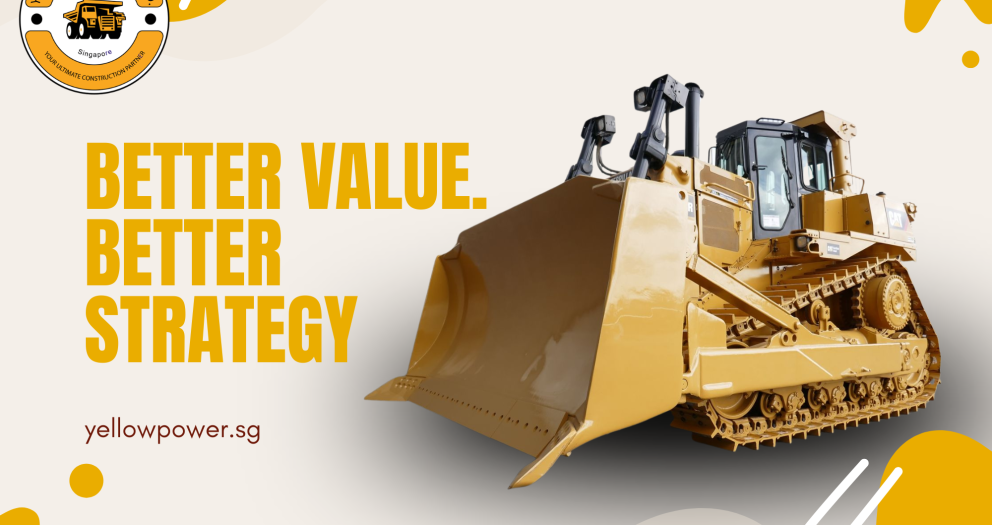
Better Value. Better Strategy.

Purchasing used units is not merely about cost reduction.
It is about capital discipline, operational agility, and long-term value creation.

A. Better Value — Smarter Capital Allocation

Let us approach this with practical realism.

New units typically demand substantial upfront investment and are subject to accelerated depreciation, particularly within the first years of ownership. The immediate decline in asset value can significantly impact return on investment.

By selecting used units, organizations are able to:

  • Substantially reduce initial capital expenditure
  • Preserve healthier cash flow
  • Allocate financial resources toward expansion, innovation, market development, or human capital

In essence, we are not paying a premium for novelty.
We are investing in performance, productivity, and measurable business outcomes.

This reflects disciplined and value-driven leadership.


B. Better Strategy — Accelerated Execution

In business, timing is often the defining factor between success and missed opportunity.

New equipment procurement frequently involves extended lead times due to manufacturing cycles, logistical constraints, or supply chain disruptions. In contrast, used units are generally available for immediate deployment.

This enables organizations to:

  • Initiate operations without unnecessary delay
  • Maintain project timelines
  • Capture market opportunities at the right moment

Strategy is not defined solely by vision.
It is equally defined by agility — the capacity to act decisively when opportunity presents itself.


C. Lower Depreciation Exposure

It is widely recognized that new assets experience the steepest depreciation during the early phase of their lifecycle.

When acquiring used units, much of this initial depreciation has already occurred. Organizations enter ownership at a more stabilized valuation level.

Should resale, upgrade, or asset rotation become necessary, the financial impact is typically more manageable and predictable.

This is not simply cost efficiency.
It is prudent asset lifecycle management.


D. Proven Performance and Transparency

Used units come with operational history — a valuable advantage.

Maintenance records, performance data, and real-world usage history provide tangible insights prior to acquisition. This reduces uncertainty and enhances informed decision-making.

Rather than investing in theoretical performance, we invest in demonstrated reliability.

When sourced from reputable suppliers, used equipment can deliver dependable results — without the premium associated with brand-new assets.


E. Sustainability and Responsible Leadership

Extending the operational life of equipment contributes meaningfully to sustainability objectives.

It:

  • Reduces material waste
  • Minimizes resource consumption
  • Supports ESG commitments
  • Strengthens corporate responsibility positioning

Sustainability is no longer optional.
It is integral to long-term competitiveness and stakeholder trust.

Choosing used units aligns financial prudence with environmental stewardship.


Why Better Value. Better Strategy.?

Because this approach:

  • Optimizes capital allocation
  • Reduces financial exposure
  • Enhances operational agility
  • Preserves asset value
  • Supports sustainable business practices

Ultimately, this decision is not about purchasing equipment.

It is about making a deliberate and intelligent strategic choice.

Why Better Value. Better Strategy.?

Because this approach:

  • Optimizes capital allocation
  • Reduces financial exposure
  • Enhances operational agility
  • Preserves asset value
  • Supports sustainable business practices

Ultimately, this decision is not about purchasing equipment.

It is about making a deliberate and intelligent strategic choice.

In competitive environment, leading organizations do not simply focus on spending less —
they focus on investing wisely.

Better Value. Better Strategy.

That is the true strategic advantage of purchasing used units.

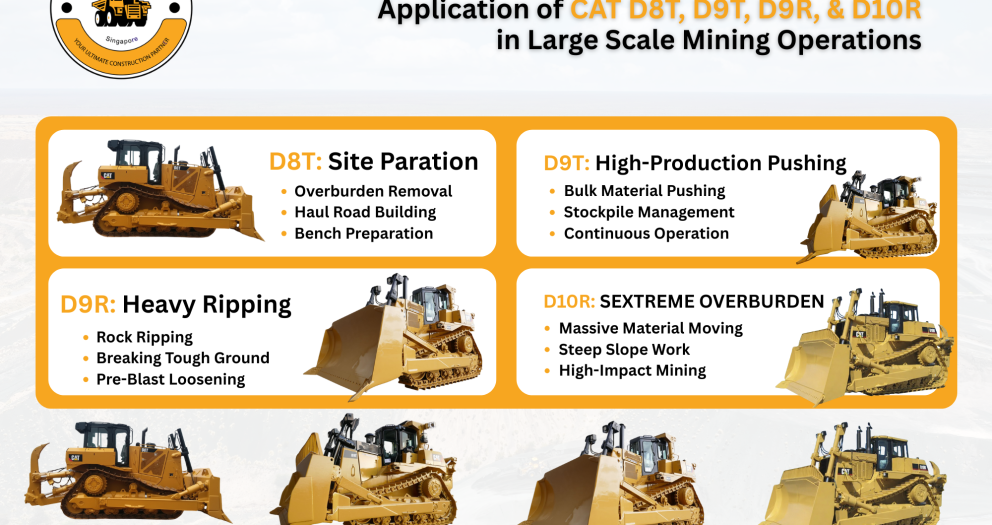
Professional Case Study: Application of CAT D8T, D9T, D9R, and D10R in Large-Scale Mining Operations

  1. Caterpillar D8T – Overburden Management & Site Preparation
    Case Study: Coal Mining Site Development

Case Study: Coal Mining Site Development

Project Scope:
A mid-sized open-pit coal mining operation required efficient removal of overburden and preparation of haul roads before production began.

Role of D8T:
The D8T was deployed for:

  • Stripping topsoil and light overburden
  • Maintaining haul roads
  • Assisting in bench preparation

Result:

  • Improved road conditions reduced truck tire wear
  • Faster site preparation timeline
  • Optimized fuel efficiency for medium-duty pushing tasks

Conclusion:
The D8T proved ideal for balanced power, maneuverability, and cost-effective ground preparation.

  1. Caterpillar D9T – High-Production Pushing in Mining

Case Study: Large Open-Pit Nickel Mine

Project Scope:
A high-production mining site required continuous heavy pushing of blasted material toward loading zones.

Role of D9T:

  • Moving large volumes of overburden
  • Assisting in stockpile management
  • Maintaining productivity during peak shifts

Result:

  • Reduced material handling time
  • Increased operational consistency
  • Lower cost per BCM (Bank Cubic Meter)

Conclusion:
The D9T provided the ideal balance between power and operational efficiency for continuous mining production.

  1. Caterpillar D9R – Heavy Ripping & Material Loosening

Case Study: Hard Rock Quarry Operation

Project Scope:
A quarry operation faced extremely compacted rock layers requiring pre-blasting ripping.

Role of D9R:

  • Equipped with multi-shank ripper
  • Breaking compacted rock before excavation
  • Assisting loaders by loosening material

Result:

  • Reduced drilling and blasting costs
  • Improved loading efficiency
  • Increased daily production output

Conclusion:
The D9R delivered reliable heavy-duty ripping performance under extreme conditions.

  1. Caterpillar D10R – Extreme High-Impact Mining Applications

Case Study: Large-Scale Overburden Removal Project

Project Scope:
A major copper mining project required the movement of massive volumes of dense overburden material in extreme terrain.

Role of D10R:

  • High-capacity blade for large material displacement
  • Continuous heavy pushing under steep slope conditions
  • Supporting primary production targets

Result:

  • Significant increase in production rate
  • Improved cycle efficiency
  • Strong durability in abrasive environments

Conclusion:
The D10R excelled in maximum production environments requiring superior pushing power and structural durability.

Comparative Summary

Model: CAT D8T

  • Best Application: Site prep & medium-duty pushing
  • Strength: Fuel efficiency & versatility
    Model: D9T
  • Best Application: High-production pushing
  • Strength: Balanced power & efficiency
    Model: D9R
  • Best application: Hard ripping & heavy ground
  • Strength: Durable ripping performance
    Model: D10R
  • Best Application: Extreme large scale-mining
  • Strength: Maximum pushing capacity

Final Professional Insight

In large-scale mining operations, selecting the correct bulldozer model directly impacts productivity, operational cost, and project timelines.

D8T = Efficient groundwork specialist
D9T = Production-driven workhorse
D9R = Heavy-duty ripper for tough terrain
D10R = High-capacity powerhouse for extreme mining

Strategic fleet combination of these units ensures optimized performance across different mining phases—from preparation to peak production.

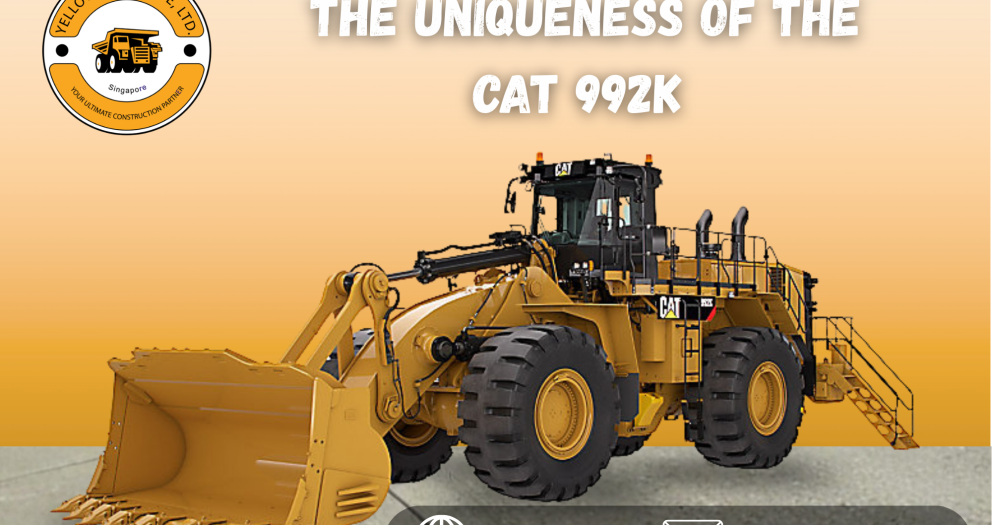
The Unique Strength of the CAT 992K: A High-Performance Mining Wheel Loader with Unmatched Productivity

The Uniqueness of the CAT 992K

The CAT 992K is not just a wheel loader—it is a production-driven mining machine engineered for maximum efficiency, durability, and fuel optimization. Designed primarily for large-scale mining and quarry operations, the 992K stands out in several key areas:

  1. Optimized for Large-Scale Production

The 992K is purpose-built for loading large off-highway haul trucks in mining environments. Its high bucket capacity and powerful breakout force allow it to move massive volumes of material in fewer passes, directly improving cycle times and reducing cost per ton.

  1. Fuel Efficiency with Power Balance

Equipped with a high-performance Cat engine and advanced powertrain system, the 992K delivers exceptional fuel efficiency relative to its size class. Caterpillar engineered this unit to balance power and fuel consumption, making it more economical over long production cycles.

  1. Structural Durability

Mining operations demand extreme toughness. The 992K features reinforced structures, heavy-duty frames, and mining-specific components designed to withstand abrasive materials and continuous high-load operations.

  1. Advanced Hydraulic System

Its load-sensing hydraulic system provides smooth, precise control while maximizing lifting performance. This ensures faster loading cycles and better operator productivity.

  1. Operator Comfort & Safety

The spacious, ergonomically designed cab reduces operator fatigue during long shifts. Enhanced visibility and integrated safety systems contribute to safer operations in demanding mining conditions.


Comparison & Similarities with Bulldozers

To better understand the 992K’s position in heavy equipment operations, let’s compare it with several bulldozer models:

  • Caterpillar D8T
  • Caterpillar D9T
  • Caterpillar D9R
  • Caterpillar D10R

Functional Differences

Aspect
Main Function

  • CAT 992K: Loading & material handling
  • D8T / D9T / D9R / D10R: Pushing, ripping, grading
    Application
  • CAT 992K: Mining truck loading
  • D8T / D9T / D9R / D10R: Surface preparation & material movement
    Mobility
  • CAT 992K: Wheeled
  • D8T / D9T / D9R / D10R: Tracked
    Productivity Focus
  • CAT 992K: High-volume loading
  • D8T / D9T / D9R / D10R: Ground shaping & pushing power

Key Difference:

The 992K is designed to load, while bulldozers are designed to push and prepare terrain.

Similarities

Despite different roles, they share important similarities:

  1. Built for mining and heavy-duty operations
  2. Equipped with powerful Caterpillar engines
  3. Designed for high durability in extreme conditions
  4. Engineered for productivity and operational efficiency

Both machine types are critical in mining workflows. In fact, they often work together—dozers prepare and maintain the ground, while loaders handle high-volume material movement.

Advantages of the CAT 992K Over Bulldozers

  1. Higher Material Handling Speed

The 992K can load haul trucks significantly faster than a bulldozer can move equivalent material volume.

  1. Lower Cost per Ton in Loading Applications

When the objective is bulk material loading, the 992K delivers superior efficiency.

  1. Greater Versatility in Loading Operations

It can handle stockpiling, truck loading, and material transfer with precision.

  1. Reduced Cycle Time

Its bucket design and hydraulic responsiveness shorten loading cycles.

  1. Production-Focused Engineering

While bulldozers shape terrain, the 992K directly contributes to revenue generation by moving saleable material quickly.

Conclusion

The CAT 992K stands as a strategic production asset in mining operations. While bulldozers like the D8T, D9T, D9R, and D10R are essential for ground preparation and heavy pushing, the 992K dominates in high-volume material loading.

In large-scale mining, success depends on machine synergy. Bulldozers prepare the environment, but the CAT 992K transforms preparation into productivity—delivering faster loading cycles, lower operating costs, and maximum output efficiency.

If you are targeting mining operations, the 992K represents power, precision, and profitability in one integrated solution.

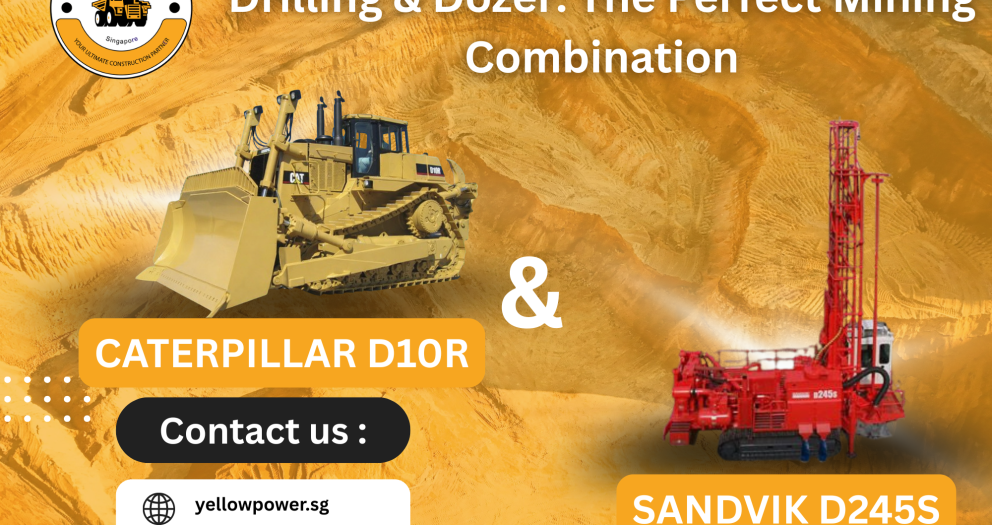
WHY DRILLING MACHINES SHOULD WORK TOGETHER WITH DOZERS

  1. Surface Preparation for Safe & Accurate Drilling

Before a drilling machine starts operating, the ground must be stable, compact, and properly leveled to ensure optimal performance. A dozer plays a critical role in preparing the surface by clearing debris, removing loose rocks, pushing away unwanted materials, and creating a solid, even working platform. This preparation is essential because uneven or unstable ground can negatively affect drilling precision and machine stability.

By ensuring that the surface is well-prepared, the dozer helps improve drilling accuracy, maintain proper alignment of blast holes, and minimize mechanical strain on the drilling equipment. In addition, a properly conditioned surface significantly reduces operational risks, preventing unexpected machine movement, slippage, or structural stress during drilling operations.


  1. Higher Productivity in Mining Operations

In mining projects, drilling and dozing activities are closely connected and must operate in coordination to achieve maximum efficiency. While the drilling machine focuses on creating blast holes according to the mine plan, the dozer supports the operation by managing overburden, maintaining haul roads, assisting in bench shaping, and clearing previously blasted materials.

This synchronized workflow prevents operational bottlenecks and ensures that each stage of the mining cycle runs smoothly. When drilling and dozing operations are aligned, material handling becomes more efficient, equipment idle time is reduced, and overall production targets can be achieved faster. As a result, site productivity increases significantly, contributing to better operational performance across the entire mining area.


  1. Improved Safety in Harsh Environments

Mining and large-scale earthmoving projects often take place in harsh and challenging environments where terrain conditions are uneven, rocky, and unstable. Such conditions can slow down drilling activities and increase the risk of accidents or equipment damage.

A dozer enhances safety by stabilizing the working area, compacting loose ground, removing hazardous obstacles, and creating safer access routes for drilling machines and supporting equipment. By improving ground conditions and site accessibility, the dozer reduces the likelihood of slips, rollovers, and other safety incidents. This proactive ground management contributes to a safer and more controlled working environment for operators and site personnel.


  1. Faster Project Completion

Combining drilling machines with dozers helps streamline site preparation and operational processes, ultimately accelerating project timelines. Instead of relying on manual or slower ground preparation methods, the dozer can quickly condition and level the site, allowing the drilling unit to begin work without unnecessary delays.

This continuous coordination minimizes downtime between operational stages. When drilling machines do not have to wait for surface adjustments, overall workflow becomes more efficient. As a result, project milestones can be reached faster, helping companies meet deadlines and maintain operational momentum.


  1. Cost Efficiency in Large-Scale Projects

Although deploying both drilling machines and dozers may appear to require higher initial investment, the long-term financial benefits are substantial. Working together, these machines improve operational efficiency, reduce idle time, minimize delays, and lower the risk of rework caused by poor ground conditions.

Enhanced coordination also helps optimize fuel usage, reduce equipment wear and tear, and improve resource management across the site. In large-scale mining and earthmoving projects, these efficiency gains translate into significant cost savings over time. Therefore, integrating drilling and dozing operations is not just a practical strategy, but also a smart financial decision that supports sustainable project execution.

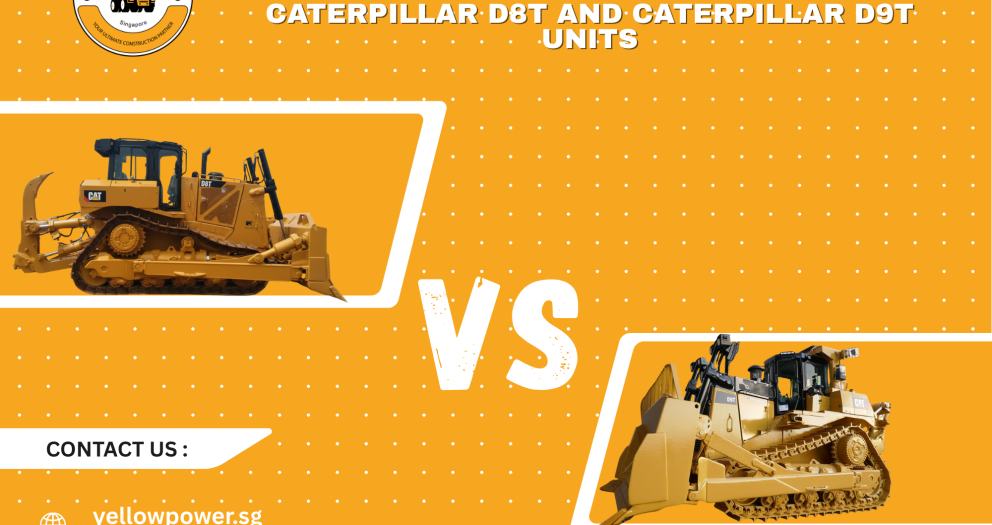
Comparison and Similarities Between Caterpillar D8T and Caterpillar D9T

The Caterpillar D8T and Caterpillar D9T are two of the most trusted crawler dozers in the heavy equipment industry. Both machines are built for demanding environments such as mining, landfill operations, land clearing, and large-scale earthmoving projects. While they share many similarities in design philosophy and durability, each model is tailored for a different level of workload and productivity.

What They Have in Common

Both the D8T and D9T are engineered with durability and efficiency in mind. They feature powerful engines, strong undercarriage systems, and solid ground contact to ensure stability in tough terrain. These machines are designed to handle continuous heavy-duty operations while maintaining reliable performance.

Other shared strengths include:

  • Excellent traction and pushing power
  • Heavy-duty frames built for harsh environments
  • Proven reliability in mining and waste handling applications
  • Strong resale value in the used equipment market

In short, both models are built to perform under pressure.


Caterpillar D8T – Efficient and Versatile

The D8T is often considered the perfect balance between power and operating cost. It delivers strong torque while maintaining better fuel efficiency compared to larger-class dozers. This makes it a smart choice for contractors who need solid performance without excessive fuel consumption.

The D8T is well suited for:

  • Medium-scale mining operations
  • Landfill and recycling facilities
  • Road construction and site preparation
  • Land clearing projects

Its stability and cost-effectiveness make it ideal for operations that require consistent productivity but do not demand extreme horsepower.


Caterpillar D9T – Built for Maximum Productivity

The D9T steps up in size, horsepower, and overall output. Designed for large-scale mining and heavy earthmoving, it offers greater pushing capacity and higher production rates. Its reinforced structure and powerful engine allow it to perform efficiently in the toughest working conditions.

The D9T is typically preferred for:

  • Large-scale mining operations
  • Overburden removal
  • High-volume earthmoving
  • Projects requiring maximum daily production

If your operation demands higher output and can justify the increased operating cost, the D9T delivers next-level productivity.


Which One Should You Choose?

The decision between the D8T and D9T ultimately comes down to project scale and production targets.

  • Choose the D8T if you need a cost-efficient, stable, and reliable machine for medium-scale operations.
  • Choose the D9T if your project requires higher horsepower, larger blade capacity, and maximum productivity in challenging conditions.

Both machines are proven performers — the right choice depends on how much power and production your project truly needs.

Offering Quality Mining Equipment for Sale

selling several units of heavy equipment that are very useful for mining, ranging from bulldozers to drilling machines

Here is a list containing heavy equipment units that are currently available with us:

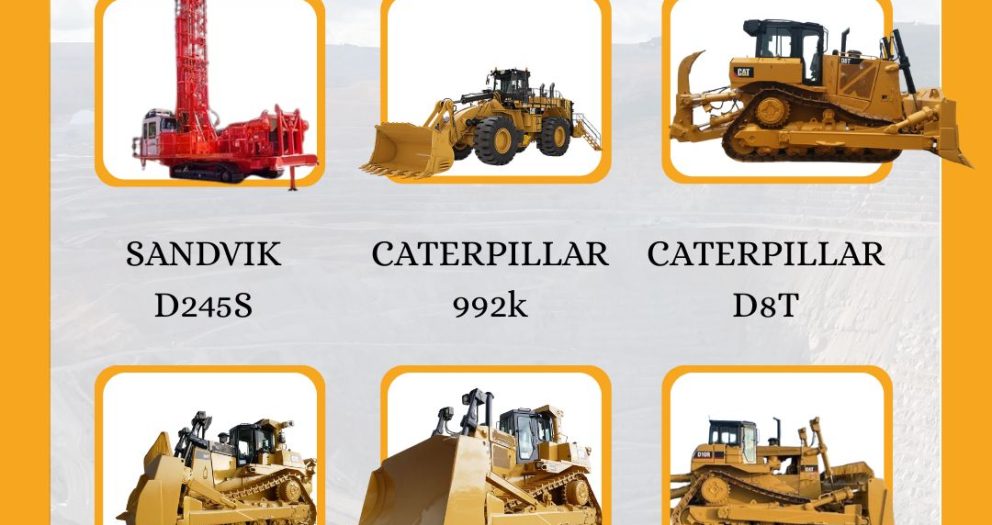
  • Sandvik D245S Drilling – YOM 2017 / 2018 / 2019 (3 Units)
    All units are in good working condition and suitable for demanding production environments
  • Caterpillar 992K Wheel Loader – YOM 2012
    Designed to maximize uptime, reduce operating costs, and deliver long-term durability in tough working environments.
  • Caterpillar D8T Dozer – YM 2018
    This unit is ideal for contractors and mining operations requiring dependable performance and long-term durability.
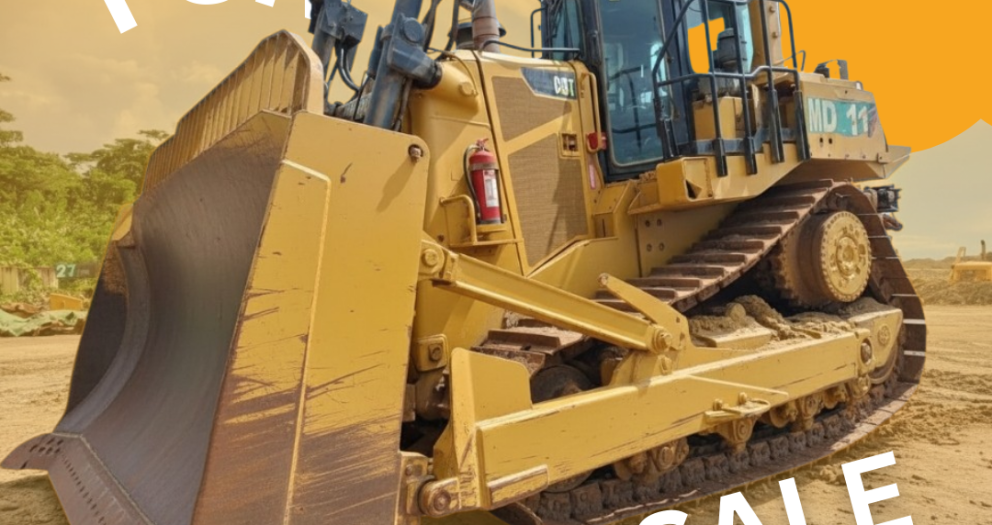
  • Caterpillar D9T Dozer – YM 2020
    This unit delivers the performance and dependability required for high-production environments.
  • Caterpillar D9R Dozer – YM 2008
    A solid investment for operations requiring strength, endurance, and long-term value.
  • Caterpillar D10R Dozer – YM 2001
    D10R is built to deliver exceptional pushing power and durability for mining operations, large-scale construction, and major earthmoving projects.

Contact us for full specifications

Komatsu HD785-7 Operating Procedure

Komatsu HD785-7 Overview & Specifications

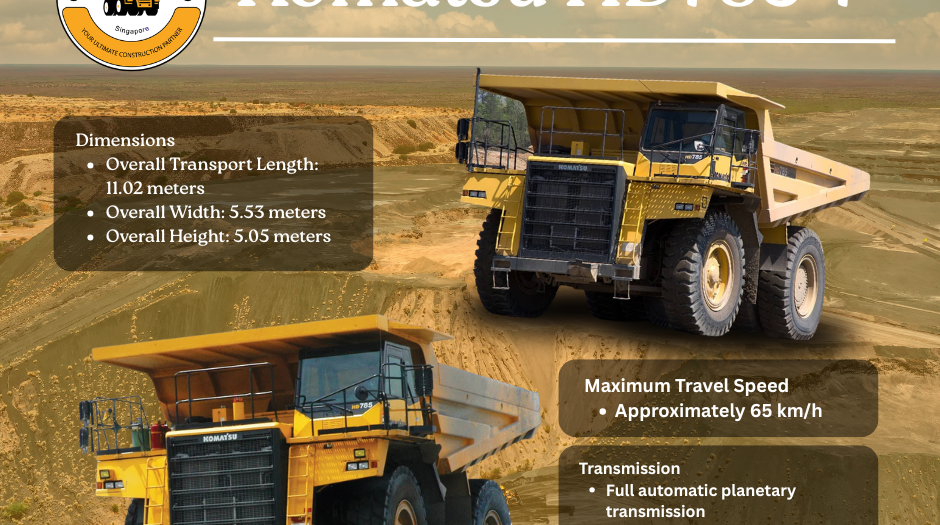
The Komatsu HD785-7 is a high-performance rigid dump truck built for heavy-duty hauling operations in mining sites, quarry projects, and large-scale earthmoving environments. Known for its durability and stable performance, this truck is designed to deliver high productivity while maintaining operator safety and long-term reliability.

With its strong power output, high payload capability, and robust braking system, the HD785-7 is an excellent solution for hauling large volumes of material such as overburden, coal, rock, and soil in demanding terrain and long working cycles.

One of the biggest advantages of the HD785-7 is its balance between high payload capacity and operational efficiency, making it suitable for continuous production targets where uptime and safety are critical.


Main Function of Komatsu HD785-7

The primary function of the Komatsu HD785-7 is to:

  • Transport heavy materials efficiently from loading points to dumping areas.
  • Support continuous hauling cycles in mining production.
  • Operate reliably in harsh conditions such as steep haul roads, uneven terrain, and extreme temperatures.

Key Benefits of Komatsu HD785-7

The HD785-7 offers several operational advantages that make it a preferred rigid dump truck in mining operations:

  1. High Productivity
  • Large payload capacity allows fewer trips and faster production output.
  • Suitable for high-volume hauling operations.
  1. Strong Engine Performance
  • Built with a powerful Komatsu diesel engine designed for heavy load and long working hours.
  • Provides consistent traction and pulling power even on uphill haul roads.
  1. Reliable Braking System
  • Equipped with oil-cooled multiple-disc braking system for both front and rear wheels.
  • Designed to improve braking performance during continuous downhill hauling.
  1. Safety & Operator Comfort
  • Ergonomic cabin design supports long working shifts.
  • Enhanced stability and control systems to support safe driving.
  1. Durable Structure
  • Designed with reinforced frame and heavy-duty components.
  • Built to withstand rough mine roads and repeated heavy loads.

Komatsu HD785-7 Specifications

Below are the key technical specifications of the Komatsu HD785-7:

Engine

  • Model: Komatsu SAA12V140E-3
  • Type: Water-cooled, direct injection, turbocharged and after-cooled diesel engine
  • Configuration: 12-cylinder

Net Power Output

  • 879 kW (1,178 HP) @ 1900 rpm

Braking System

  • Oil-cooled, multiple-disc service brakes (front and rear)
  • Full hydraulic braking system designed for high safety performance
  • Retarder support for better downhill control

Capacity

  • Rated Payload (Net Load Capacity): approximately 91 tons
  • Dump Body Capacity: approximately 40 m³

Dimensions

  • Overall Transport Length: 11.02 meters
  • Overall Width: 5.53 meters
  • Overall Height: 5.05 meters

Maximum Travel Speed

  • Approximately 65 km/h

Transmission

  • Full automatic planetary transmission
  • 7 forward speeds and 2 reverse speeds

Gross Vehicle Weight (GVW)

  • Approximately 163,780 kg

Operating Guide (Basic Professional Operation)

Below is a practical and professional overview on how to operate the Komatsu HD785-7 safely.


  1. Pre-Start Inspection (Before Operating)

Before starting the HD785-7, the operator should always perform a complete walk-around inspection:

  • Check engine oil level
  • Check coolant level
  • Check hydraulic oil level
  • Inspect tires for damage and correct pressure
  • Inspect brake condition and brake fluid level
  • Check fuel level
  • Inspect for leaks under the unit
  • Ensure lights, horn, reverse alarm, and safety devices are working properly
  • Ensure dump body is fully lowered and secure

This inspection is important to reduce breakdown risk and ensure safe operation.


  1. How to Start the Komatsu HD785-7

To start the unit properly:

  1. Ensure the surrounding area is clear of personnel and obstacles.
  2. Climb into the cabin using 3-point contact.
  3. Sit properly and adjust the seat and mirrors.
  4. Fasten the seat belt.
  5. Confirm the transmission is in Neutral (N).
  6. Apply the parking brake.
  7. Turn the ignition key to the ON position and allow system checks to complete.
  8. Start the engine and let it idle for a few minutes.
  9. Monitor dashboard indicators (oil pressure, temperature, warning lights).

Do not rush the warm-up process, especially in cold environments or after long shutdown periods.


  1. How to Operate / Drive the HD785-7

When the unit is ready to move:

  • Release the parking brake only when the route is clear.
  • Select the appropriate gear smoothly.
  • Accelerate gradually to avoid sudden stress on drivetrain components.
  • Follow site speed limits and haul road rules.
  • Always maintain safe distance from other equipment.
  • Use retarder and service brakes correctly on downhill roads.
  • Avoid sharp turns at high speed, especially when fully loaded.

Loading Operation

During loading:

  • Position the truck properly under the excavator/shovel.
  • Stay in the correct loading zone and remain stable.
  • Avoid sudden movement while being loaded.
  • Do not exceed rated payload capacity.

Dumping Operation

During dumping:

  • Stop on level and stable ground.
  • Apply parking brake.
  • Raise the dump body slowly and steadily.
  • Ensure material is fully discharged.
  • Lower the dump body completely before moving again.

  1. How to Stop and Shut Down the HD785-7

To shut down safely:

  1. Park the truck on stable ground.
  2. Shift transmission to Neutral.
  3. Apply the parking brake.
  4. Ensure dump body is fully lowered.
  5. Let the engine idle for 3–5 minutes to cool down.
  6. Turn off the engine.
  7. Remove the key.
  8. Conduct a short post-operation check (leaks, tire condition, unusual heat, etc.).

This shutdown procedure helps extend engine life and prevents overheating damage.


Conclusion

The Komatsu HD785-7 is a highly capable rigid dump truck designed for demanding heavy-haul applications. With its 91-ton payload capacity, powerful 879 kW engine output, reliable braking system, and durable build quality, it remains a strong choice for mining and quarry operations that require consistent productivity and safety.

When operated correctly following professional inspection, loading, hauling, and shutdown procedures, the HD785-7 can deliver long-term performance with reduced downtime and improved operational efficiency.

Complete Operating Tutorial – Caterpillar D9T

Manufacturer: Caterpillar
Model: D9T
Serial Number: WDM01***


  1. Introduction

The Caterpillar D9T is a heavy-duty track-type tractor designed for high-production dozing, ripping, and earthmoving operations in demanding working conditions. Operating this machine professionally requires a strong understanding of its systems, safe operating practices, and efficient working techniques.

This tutorial provides a complete and practical guide to operating the CAT D9T safely, efficiently, and professionally, following industry best practices and real field experience.


  1. Pre-Start Inspection

Before starting the machine, a thorough walk-around inspection must be performed to ensure the unit is in safe operating condition.

  • Check engine oil, coolant, hydraulic oil, and fuel levels.
  • Inspect the undercarriage (tracks, rollers, idlers, and sprockets) for damage, abnormal wear, or debris.
  • Examine hydraulic hoses, cylinders, and fittings for leaks or loose connections.
  • Ensure all guards, covers, and panels are properly installed and secured.
  • Check the blade and ripper for cracks, excessive wear, or loose pins.
  • Verify that lights, mirrors, handrails, and steps are clean and in good condition.
  • Confirm that the work area around the machine is clear of personnel and obstacles.

  1. Machine Start-Up Procedure
  • Enter the cab using three points of contact at all times.
  • Adjust the operator seat, mirrors, and controls for proper visibility and comfort.
  • Fasten the seat belt before starting the engine.
  • Turn the key to the ON position and allow the system to complete its self-check.
  • Start the engine and let it idle for several minutes to allow oil and hydraulic systems to warm up.
  • Monitor the display panel for normal readings and ensure no warning lights or fault codes are active.

  1. Basic Machine Operation
  • Use smooth and controlled movements when operating the steering and blade controls.
  • Avoid sudden acceleration, sharp turns, or aggressive braking.
  • Maintain proper engine speed according to the task and ground conditions.
  • Always operate the machine in a stable position, especially on slopes or uneven terrain.
  • Keep a safe distance from edges, drop-offs, and other machines in the work area.

  1. Dozing Operation Technique
  • Position the blade square to the material before starting the push.
  • Lower the blade gradually and maintain a consistent cutting depth.
  • Use steady forward movement to keep material flowing in front of the blade.
  • Avoid overloading the blade, which can reduce efficiency and increase component wear.
  • When finishing a pass, raise the blade smoothly and reverse carefully to the starting position.

  1. Ripping Operation Technique
  • Lower the ripper slowly until the shank penetrates the ground.
  • Apply consistent forward pressure and avoid sudden changes in direction.
  • Adjust ripper depth based on material hardness and machine load.
  • Do not force the ripper if excessive resistance is felt; reposition and continue gradually.
  • Raise the ripper completely before turning or reversing.

  1. Safety Operating Practices
  • Always wear required personal protective equipment (PPE).
  • Maintain constant awareness of surrounding personnel and equipment.
  • Never allow unauthorized persons to ride on the machine.
  • Avoid operating the machine under unsafe ground or weather conditions.
  • Follow site-specific safety rules and communication procedures at all times.
  • Use the horn and lights when moving in active work zones.

  1. Shutdown Procedure
  • Park the machine on firm, level ground.
  • Lower the blade and ripper fully to the ground.
  • Allow the engine to idle for a few minutes to stabilize temperatures.
  • Turn off the engine and remove the key.
  • Perform a brief post-operation inspection to identify any leaks or damage.
  • Clean the cab and access steps to maintain safe working conditions.

  1. Professional Operator Tips
  • Operate smoothly and consistently to extend machine life.
  • Listen to the machine; unusual sounds often indicate early problems.
  • Plan each pass efficiently to reduce unnecessary travel and fuel consumption.
  • Maintain clear communication with supervisors and spotters.
  • Treat the machine as a production asset—proper operation directly impacts productivity and maintenance costs.

  1. Conclusion

Professional operation of the Caterpillar D9T requires discipline, awareness, and respect for the machine’s capabilities. By following the procedures and techniques outlined in this tutorial, operators can achieve optimal performance, maintain high safety standards, and ensure long-term reliability of the equipment.

How To Operate The CAT 374FL, From The Tnitial Walk-Around To The Final Shutdown.

  1. Pre-Operation: The Ground Inspection
    Before you even step into the cab, you must perform a "Walk-Around Inspection." This ensures the machine is mechanically sound and safe for the environment.

Check Fluids: Verify engine oil, hydraulic fluid, and coolant levels.

Inspect the Undercarriage: Look for loose bolts, damaged track links, or debris stuck in the rollers.

Check for Leaks: Scan the hydraulic hoses and cylinders for any signs of weeping or puddles under the machine.

Grease Points: Ensure the boom, stick, and bucket pins are properly lubricated to prevent metal-on-metal wear.

  1. Entering the Cab and Startup
    The Cat 374FL features an advanced, pressurized cab. Safety starts the moment you sit down.

Three-Point Contact: Always use two hands and one foot (or vice versa) when climbing into the cab.

Adjust the Seat: Ensure you can reach the pedals and joysticks comfortably without straining.

Fasten Seatbelt: The machine will often provide a warning if the belt isn't buckled.

Key On: Turn the key to the "On" position to let the electronics boot up. Check the touchscreen monitor for any active alerts.

Ignition: Turn to "Start." Let the engine idle for 3–5 minutes to allow the oil to circulate and the hydraulic system to warm up.

  1. Understanding the Controls
    The 374FL uses standard ISO controls, though these can be customized via the monitor.

Left Joystick:

Forward/Back: Moves the Stick (Arm) out and in.

Left/Right: Swings the upper structure of the excavator.

Right Joystick:

Forward/Back: Lowers and raises the Boom.

Left/Right: Controls the Bucket curl (open/close).

Travel Pedals/Levers: Controls the tracks. Pushing both forward moves the machine straight; pushing one causes a turn.

  1. Operational Techniques & Technology
    The Cat 374FL is packed with "Standard Cat Technology" that makes operation more efficient:

Cat Grade with 2D: Use the monitor to set your desired depth and slope. The system provides real-time guidance so you don't over-dig.

Lift Assist: This helps you stay within the machine's safe lifting capacity to prevent tipping.

Swing Assist: Useful for repetitive loading; it automatically stops the swing at a set point to line up with a truck.

Pro Tip: Always operate with the drive sprockets at the rear. This protects the final drives from impact and provides better stability during heavy digging.

  1. Shut Down Procedure
    Never simply "kill the engine" after a hard shift. Large diesel engines need to cool down gradually.

Park on Level Ground: Lower the bucket flat to the ground.

Low Idle: Set the throttle to low and let the engine run for about 3 minutes. This prevents turbocharger damage.

Lockout: Raise the Hydraulic Lockout Lever (the red lever on the left). This disables all controls.

Turn Off: Turn the key to "Off" and exit the cab using three-point contact.

Conclusion
Operating a Cat 374FL is about more than just moving dirt; it's about managing a high-tech, multi-million dollar asset with precision. By following a strict pre-check routine, mastering the joystick sensitivity, and utilizing the onboard Grade technologies, you can maximize production while maintaining a safe job site. Remember: Smoothness is more important than speed. Speed comes with experience, but smoothness prevents breakdowns.

Professional Operating Tutorial for Heavy Equipment Units

This document provides a professional, step-by-step operational guide for the following heavy equipment units:

Caterpillar (CAT) 349D2L Hydraulic Excavator

  • Serial Number (SN): TAH10***
  • Year of Manufacture (YOM): 2018

CAT 349D2L – Hydraulic Excavator

Unit Overview

The CAT 349D2L is a heavy-duty hydraulic excavator designed for:

  • Overburden removal
  • Trenching and excavation

* Loading trucks in mining and construction environments

Pre-Start Checks

  • Inspect undercarriage, tracks, and rollers
  • Check hydraulic oil and coolant levels
  • Inspect boom, stick, bucket, and pins
  • Verify swing motor and slew ring condition
  • Test cameras, alarms, and safety systems

Start-Up Procedure

  1. Enter cabin safely and secure door
  2. Adjust operator seat and control levers
  3. Insert key and start engine
  4. Allow hydraulic system to warm up
  5. Release hydraulic lock lever

Excavation Operation

  • Position machine on stable ground
  • Use smooth joystick movements
  • Coordinate boom, stick, and bucket for efficient digging
  • Avoid overloading the bucket
  • Maintain safe swing radius
  • Load trucks evenly to prevent spillage

Professional Tip:
Operate within rated lift capacity to prevent machine instability


Shutdown Procedure

  • Park on level ground
  • Lower attachment to ground
  • Idle engine for cooldown
  • Turn off engine and isolate battery
Back to Top
Product has been added to your cart