Best Used Heavy Equipment Trading Company in Singapore

Search

Contact +6581600186 - Yellow Power Pte Ltd

Common Mistakes in Bulldozer Operation You Should Avoid

The Importance of Proper Bulldozer Operation

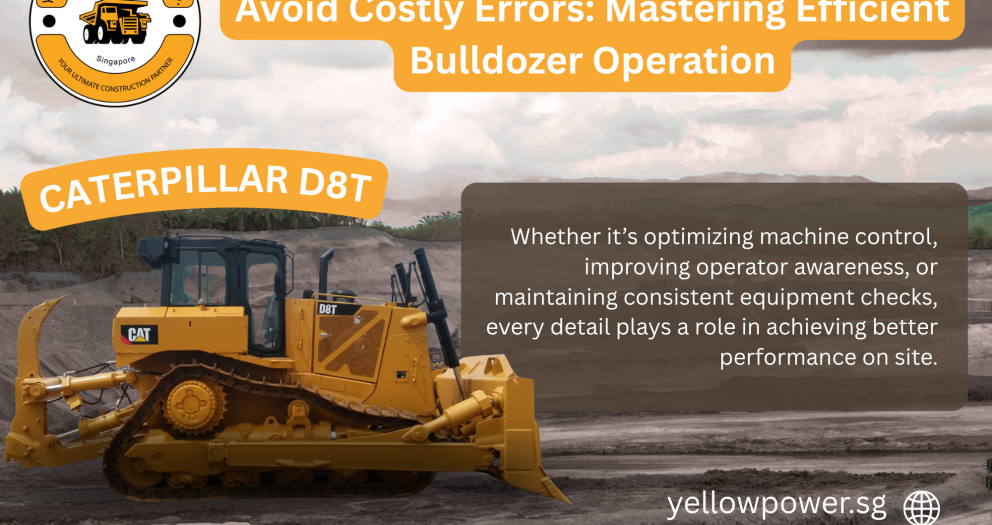
Bulldozers are indispensable assets in modern heavy earthmoving operations, forming the backbone of activities such as land clearing, grading, and large-scale site preparation. Their ability to move vast amounts of material efficiently makes them a critical component in construction and mining projects. However, even the most advanced and powerful bulldozers can fall short of expectations when not operated correctly. In reality, it is often not major mechanical failures that reduce performance, but rather small, frequently overlooked mistakes in day-to-day operations. These seemingly minor errors can gradually lead to reduced productivity, higher fuel consumption, and accelerated wear on essential machine components. Over time, the cumulative effect of these inefficiencies can significantly increase operational costs and disrupt overall project timelines, ultimately affecting profitability and performance.

Common Mistakes That Impact Performance

A wide range of common operational mistakes can negatively impact bulldozer performance, many of which are entirely preventable with the right knowledge and discipline. Improper blade handling, for instance, can result in uneven grading, material spillage, and unnecessary rework. Inefficient pushing techniques such as overloading the blade or using incorrect travel paths can increase cycle times and fuel consumption while placing additional strain on the machine. Furthermore, neglecting routine maintenance, including regular inspections and timely servicing, can allow minor issues to develop into serious mechanical problems. These mistakes not only reduce efficiency but also increase the likelihood of unexpected downtime, which can be costly in high demand projects. Addressing these issues requires a combination of proper training, operational awareness, and a commitment to best practices on site.

Understanding the Root Causes of Inefficiency

To effectively minimize these mistakes, it is essential to understand the underlying causes of inefficiency in bulldozer operations. In many cases, these issues stem from insufficient operator training, lack of clear operational planning, or inconsistent work habits. Without proper guidance, operators may develop inefficient techniques that negatively impact performance over time. Additionally, poor coordination on site can lead to unnecessary machine movement and wasted effort. By identifying and addressing these root causes, companies can implement more structured and efficient workflows. Investing in operator training, establishing clear operational procedures, and promoting consistent performance standards can significantly enhance productivity. Even small adjustments such as improving blade control, optimizing work patterns, and scheduling regular maintenance can deliver measurable improvements in efficiency and equipment longevity.

Practical Solutions for Better Performance

Improving bulldozer performance does not always require major changes; often, it is the consistent application of practical solutions that makes the biggest difference. This includes adopting proper operating techniques, such as maintaining optimal blade angles, avoiding excessive load, and planning efficient push routes. Regular maintenance should also be prioritized to ensure that the machine remains in peak condition. By focusing on these practical steps, companies can reduce downtime, lower operating costs, and improve overall workflow efficiency. A well operated and well maintained bulldozer not only performs more effectively but also contributes to a safer and more productive job site environment.

Achieving Long Term Operational Success

In today’s highly competitive construction and mining industries, achieving long-term success requires a strong focus on both productivity and risk management. Avoiding common bulldozer operation mistakes is a critical part of this process. By improving operator awareness, maintaining equipment consistently, and continuously refining operational strategies, businesses can ensure more reliable and efficient performance across all projects. Ultimately, the ability to identify and address these common pitfalls is not just an advantage it is a necessity. Companies that prioritize efficiency, precision, and reliability will be better positioned to meet project demands, control costs, and maintain a sustainable competitive edge in the industry.
Maximizing Earthmoving Efficiency with the Caterpillar 349D2L Excavator

Driving Efficiency in Modern Earthmoving Operations

In modern earthmoving and mining operations, efficiency is no longer just a performance target it has become a fundamental requirement for long term success. Companies today face increasing pressure to move larger volumes of material within tighter project timelines, all while maintaining strict cost control, high safety standards, and consistent operational reliability. As projects continue to grow in scale and complexity, the demand for advanced and dependable heavy equipment becomes more critical than ever. Achieving optimal efficiency is not only about using powerful machinery, but also about integrating smart engineering, precision control, and seamless performance across every stage of the operation.

Power and Performance That Deliver Results

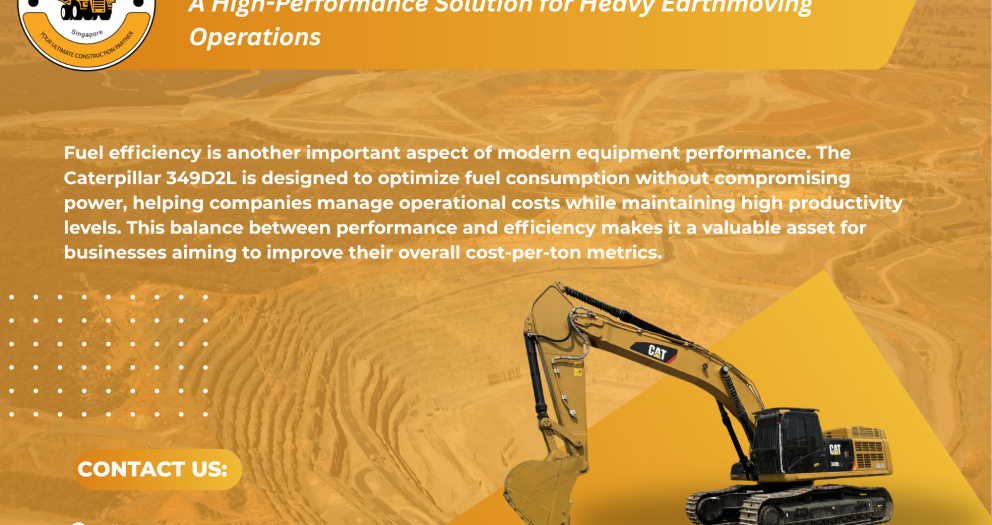
The Caterpillar 349D2L is purpose-built to meet these demanding expectations, delivering exceptional digging power combined with fast and efficient cycle times. This enables operators to maximize productivity with every pass, ensuring that more work is completed in less time. Its advanced hydraulic system provides smooth, precise, and highly responsive control, allowing for consistent performance across a wide range of applications. Whether handling heavy loading tasks, trenching, or large scale excavation, the machine performs reliably even in the most challenging ground conditions. This level of capability is especially valuable in high-demand operations such as overburden removal, site preparation, and major excavation projects, where both speed and accuracy play a critical role in achieving project goals.

Built for Durability and Long-Term Reliability

Beyond its impressive performance, the Caterpillar 349D2L is engineered with a strong focus on durability and long-term reliability. Its reinforced structural design and high quality components are built to withstand harsh and demanding working environments, from rugged construction sites to intensive mining operations. This durability significantly reduces the risk of unexpected breakdowns and minimizes costly downtime, allowing operations to run more smoothly and efficiently. Over time, this translates into lower maintenance costs and improved equipment lifespan. Consistent operational reliability is a key factor in maintaining productivity, as it ensures that projects can continue without unnecessary interruptions or delays.

Enhancing Operator Comfort and Productivity

Operator performance is another essential factor in maximizing overall productivity, and the Caterpillar 349D2L addresses this through a thoughtfully designed and ergonomic working environment. The cabin is built to provide maximum comfort, reducing operator fatigue during long working hours. Features such as improved visibility, intuitive controls, and responsive handling allow operators to work with greater precision and confidence. This not only enhances productivity but also contributes to safer job site operations. When operators are comfortable and in control, they are able to maintain consistent performance, ultimately leading to higher efficiency and better project outcomes.

A Complete Solution for Efficient Earthmoving

Maximizing efficiency in earthmoving requires a well balanced combination of power, precision, durability, and operator support. The Caterpillar 349D2L successfully brings all of these elements together, making it a reliable and high performing solution for modern construction and mining operations. By delivering consistent results, reducing downtime, and supporting optimal operator performance, it enables businesses to achieve higher productivity while maintaining operational stability. For contractors and industry professionals focused on long term efficiency and performance, the 349D2L stands out as a dependable and strategic investment in today’s competitive environment.

How the Sandvik D245S Ensures Consistency, Efficiency, and Durability in Modern Mining

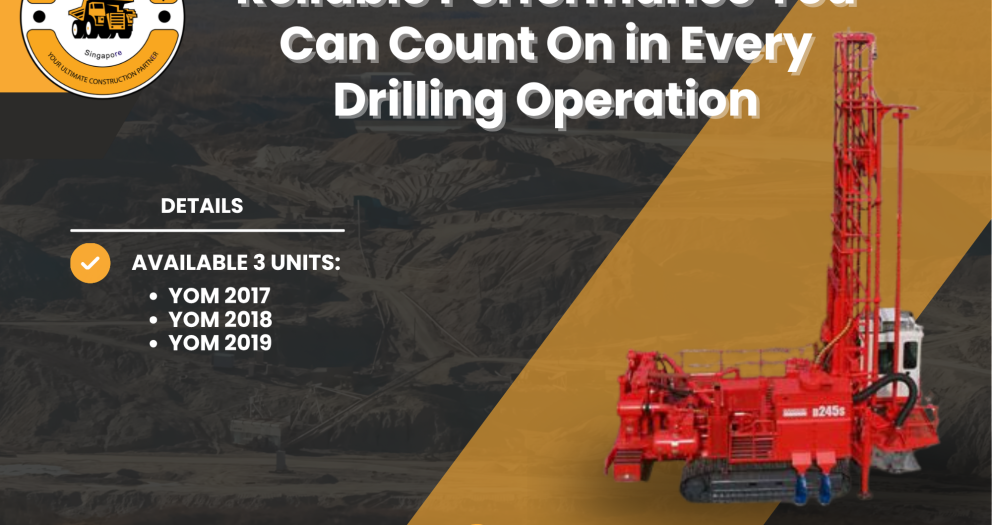
In today’s highly demanding mining industry, reliability is more than just a desirable feature it is a necessity. Equipment must consistently perform under pressure, adapt to challenging ground conditions, and support continuous production without compromise. The Sandvik D245S is specifically engineered to meet these expectations, making it a trusted solution for high-performance surface drilling operations.

Built with a strong and durable structure, the Sandvik D245S is designed to withstand harsh environments and intensive workloads. Its advanced drilling system delivers precise and consistent blasthole execution, ensuring optimal fragmentation for downstream processes such as blasting, loading, and hauling. This level of accuracy not only improves operational efficiency but also helps reduce overall project costs.

One of the key strengths of the D245S lies in its ability to maintain stable performance across varying rock formations. Whether operating in soft ground or hard rock conditions, the machine adapts effectively to ensure continuous productivity. This reliability minimizes unplanned downtime and supports smooth, uninterrupted operations—an essential factor in achieving production targets.

Beyond its technical capabilities, the Sandvik D245S is also designed with the operator in mind. Its intuitive control systems and ergonomic layout contribute to safer and more comfortable working conditions, allowing operators to maintain focus and efficiency during long shifts. Enhanced visibility and user-friendly interfaces further support precise operation and reduce the risk of errors in the field.

Moreover, the machine’s engineering emphasizes ease of maintenance and long-term durability. With components built for longevity and serviceability, the D245S helps reduce maintenance time and extend equipment life cycles, providing greater value over the long term.

Ultimately, the Sandvik D245S is more than just a drill rig it is a reliable partner in achieving operational excellence. By combining power, precision, and durability, it enables mining companies to improve productivity, enhance safety, and maintain consistent performance in even the most demanding drilling environments.

Why Bulldozers Are Crucial for Effective Construction Site Preparation

Before any construction project begins, proper site preparation is essential to ensure that the entire process runs smoothly and safely. One of the most important machines used during this early phase is the bulldozer. Known for its strength, durability, and ability to move large amounts of material, a bulldozer plays a critical role in preparing land for construction activities.

From clearing obstacles to leveling uneven terrain, bulldozers help transform raw land into a workable construction site. Their efficiency not only speeds up the preparation process but also ensures that the foundation for the project is stable and ready for further development.

Clearing Land and Removing Obstacles

One of the first tasks in construction site preparation is clearing the land. Construction areas often contain trees, rocks, debris, old structures, or other obstacles that must be removed before work can begin.

Bulldozers are specifically designed to handle these heavy-duty tasks. With their powerful engines and large front blades, they can push, uproot, and move large objects with ease. This allows contractors to clear large areas of land quickly and efficiently, reducing the time required to prepare the site for the next stage of construction.

In addition, bulldozers can work in challenging environments where manual labor or smaller machines would struggle. Their robust design allows them to operate effectively in rough terrain, muddy conditions, or areas with dense debris.

Leveling and Grading the Ground

Another critical role of bulldozers is leveling and grading the ground. Construction projects require a stable and even surface to ensure that structures are built on a solid foundation. Uneven terrain can lead to structural problems, drainage issues, or safety risks during construction.

Bulldozers are equipped with adjustable blades that allow operators to cut, push, and distribute soil across the site. This makes it possible to level hills, fill depressions, and shape the ground according to the project’s design requirements.

By creating a smooth and balanced surface, bulldozers help engineers and contractors establish the proper groundwork needed for roads, buildings, and infrastructure projects.

Moving and Managing Large Volumes of Material

Construction site preparation often involves moving large quantities of soil, sand, gravel, and other materials. Bulldozers are highly effective for this task because they can push large loads over short distances quickly and efficiently.

Their ability to move material across the site helps streamline the workflow and supports other machines such as excavators, loaders, and graders. Bulldozers often work alongside these machines to ensure that the site preparation process runs efficiently and stays on schedule.

This coordinated work between heavy equipment plays a key role in increasing productivity on construction projects.

Improving Efficiency and Reducing Project Time

Time efficiency is a major factor in construction projects. Delays during site preparation can impact the entire construction schedule and increase project costs.

Bulldozers help minimize these risks by performing multiple tasks quickly and effectively. Their powerful performance allows operators to complete land clearing, grading, and material movement faster than many other machines.

By speeding up the site preparation phase, bulldozers allow construction teams to move forward with foundation work, structural development, and other critical stages of the project without unnecessary delays.

Enhancing Safety on Construction Sites

Safety is always a top priority in construction environments. Unstable ground, debris, and uneven terrain can create hazardous working conditions for workers and equipment.

Bulldozers help improve site safety by removing dangerous obstacles and creating a stable working surface. Properly prepared ground reduces the risk of accidents, equipment instability, and operational hazards during later stages of construction.

Modern bulldozers are also equipped with advanced technology and safety features that assist operators in maintaining better control and visibility while working on the site.

A Key Machine in Construction Projects

Bulldozers remain one of the most essential pieces of heavy equipment in the construction industry. Their ability to clear land, level terrain, move materials, and improve site conditions makes them indispensable during the early stages of project development.

Without proper site preparation, construction projects may face structural challenges, delays, and increased costs. By performing critical groundwork tasks efficiently, bulldozers help ensure that construction projects start with a strong and reliable foundation.

As infrastructure development and construction projects continue to grow worldwide, the role of bulldozers in site preparation will remain fundamental to building safe, efficient, and successful construction environments.

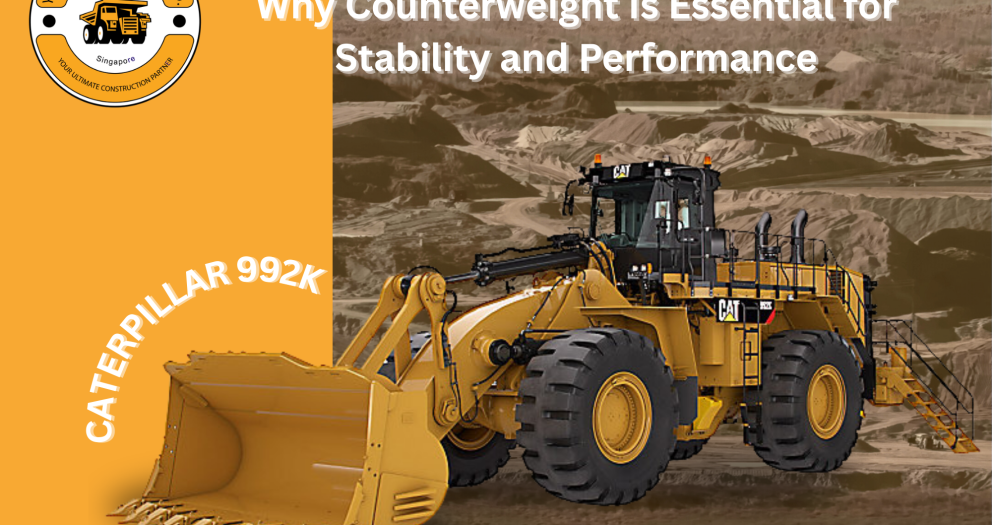
Understanding the Function of Counterweight on the Caterpillar 992K Wheel Loader

The Caterpillar 992K is one of the most powerful wheel loaders used in large-scale mining and heavy material handling operations. Designed to handle massive loads efficiently, this machine relies on several engineering features to maintain stability and performance. One of the most important components that supports this capability is the counterweight.

A counterweight is a heavy component installed at the rear of the wheel loader. Its main purpose is to balance the machine when the bucket at the front is lifting or carrying heavy materials such as rock, ore, or soil. Without this balancing weight, the loader could lose stability when the bucket is fully loaded, especially during lifting or transporting operations.

On large machines like the Caterpillar 992K, the bucket can carry extremely heavy loads. When the bucket is raised or filled with material, a significant amount of weight shifts toward the front of the machine. The counterweight works to offset this load by distributing weight toward the rear, helping the machine maintain a stable center of gravity.

This balance is critical not only for operational efficiency but also for safety. Proper weight distribution allows operators to perform loading tasks smoothly and reduces the risk of the machine tipping forward. It also helps improve traction on the rear wheels, ensuring the loader remains stable while maneuvering in challenging environments such as mines and quarries.

In addition to stability, the counterweight contributes to the overall productivity of the machine. By maintaining proper balance, the loader can handle heavier loads and operate more efficiently during repetitive loading cycles. This makes the Caterpillar 992K a reliable machine for demanding operations where performance and safety are equally important.

Understanding the function of the counterweight highlights how thoughtful engineering design supports the capabilities of modern wheel loaders. In heavy-duty machines like the Caterpillar 992K, every component plays a role in ensuring the machine operates safely, efficiently, and reliably in the most demanding working conditions.

Understanding the Key Role of Bulldozers in Site Preparation and Earthmoving Operations

Introduction

In modern construction and land development, heavy equipment plays a crucial role in completing projects efficiently. Among the many machines used on job sites, the bulldozer stands out as one of the most powerful and versatile pieces of equipment. Designed with a large front blade and a strong track system, bulldozers are built to move massive amounts of soil, debris, and other materials with ease.

Because of their strength and durability, bulldozers are widely used in construction projects ranging from small land preparation tasks to large-scale infrastructure development.

Land Clearing and Site Preparation

One of the primary uses of a bulldozer in construction is land clearing. Before any building or infrastructure project can begin, the site must first be cleared of obstacles such as trees, rocks, and uneven ground.

Bulldozers are highly effective for this task because their powerful blades allow operators to push and remove large objects quickly. This process helps create a clean and workable surface for the next stages of construction, ensuring that the project starts on stable ground.

Moving and Spreading Soil

Another important function of a bulldozer is earthmoving. Construction sites often require the relocation of large volumes of soil or other materials to reshape the terrain.

Bulldozers can push soil across the job site and distribute it evenly to form the desired surface level. This is especially useful in projects such as road construction, building foundations, and large industrial developments.

Leveling and Grading the Ground

Bulldozers are also commonly used for leveling and grading surfaces. A properly leveled site is essential for structural stability and safety.

By adjusting the blade angle and position, operators can smooth out uneven terrain and create flat surfaces suitable for construction. This step ensures that foundations, roads, and other structures are built on stable and well-prepared ground.

Supporting Large-Scale Construction Project

Beyond basic earthmoving tasks, bulldozers often support a variety of construction activities. They are used in:

  • Road construction and highway development
  • Mining and quarry operations
  • Land development and agricultural preparation
  • Dam and infrastructure projects

Their durability and ability to operate in tough environments make them an essential machine for projects that require heavy-duty performance.

Conclusion

Bulldozers play a fundamental role in construction projects by assisting with land clearing, soil movement, and site leveling. Their powerful design allows contractors to prepare construction sites more efficiently and complete demanding tasks with greater productivity.

For construction companies and project developers, choosing the right bulldozer can significantly improve operational efficiency and help ensure that projects are completed on time and within budget.

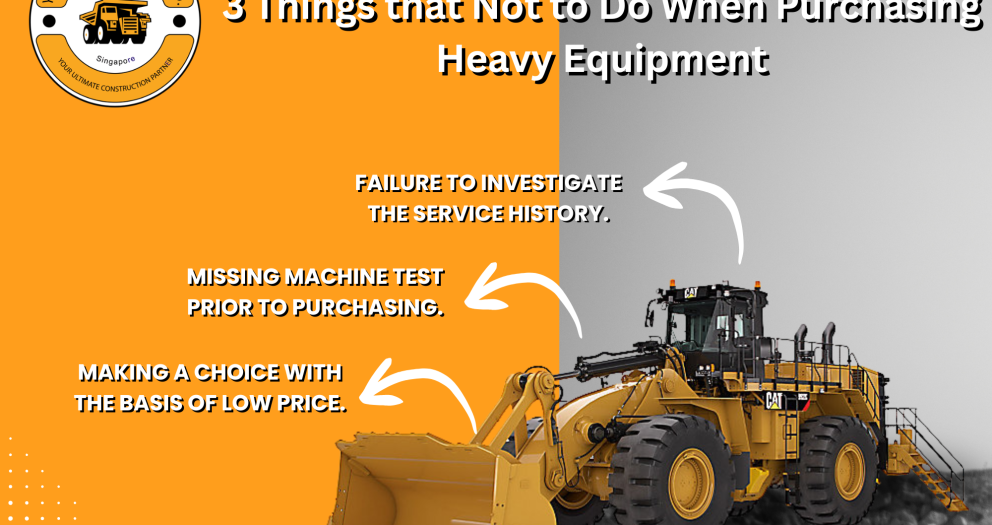
The 3 Things You Must Not Do When purchasing Heavy equipment

Huge investment in a purchase of heavy equipment is made and one can make a wrong turn, and the purchase can result to costly repair of the purchase, lost working time and poor productivity. Sadly, the majority of buyers are usually fixated on the pricing and overlook other important elements that should be considered before purchasing a commodity.

Choosing based only on a low price

Some of the mistakes include, the selection of equipment, due to its low cost. It is possible that a lower price could be appealing in the short term but it is not always the reality and the worth of the machine in the long term. In the majority of cases cheaper equipment can prove to be more problematic in regards to repair and maintenance that can prove to be far costlier in the long run.

Not checking the service history

The other mistake is failure to check the service and maintenance records of the machine. It is essential to inspect the records of the services as it will provide the idea of the equipment maintenance condition. Without this information, the customers are able to purchase equipment that may have a few hidden problems or mechanical incompatibilities.

Skipping the machine test before purchase

Among the third mistakes are failure to do a proper inspection/test of the machine and consequently buy the machine. Equipment demonstration is done to allow the buyers to see how the machine operates including the potential problems and how the machine runs and meets the operational demands.

Before purchasing heavy equipment, it must be taken into serious consideration. The buyer is also able to take time to verify its condition and its maintenance history and operations to help him get rid of the unwarranted risks and make a more assured investment.

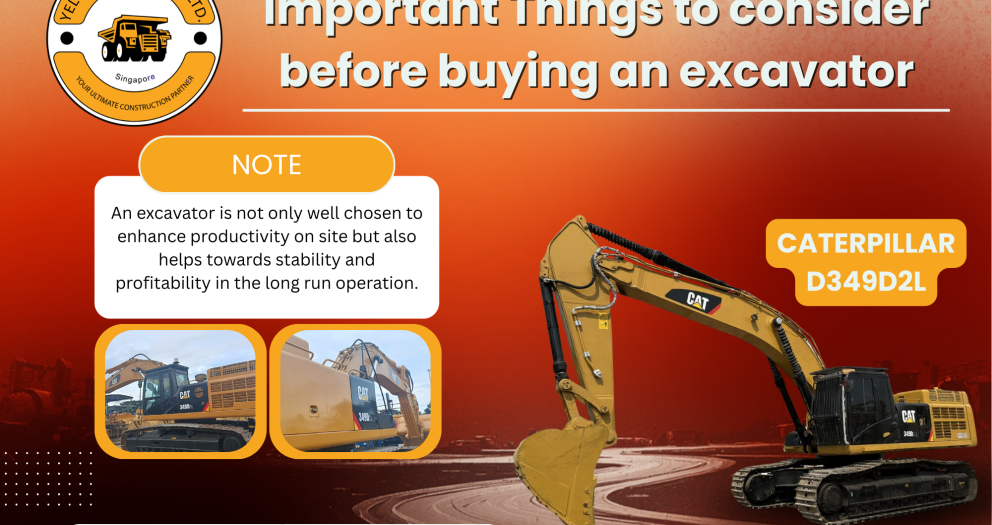
Significant Factors to Consider Before Purchasing an Excavator

The construction companies, contractors, and mining operators investing in purchasing an excavator have to invest a lot of money in it. Proper machine can enhance productivity; less time is used in running the machine and it will aid in the sustainability of a project in the long run. Nevertheless, a wrong decision can result in the increased maintenance expenses, unforeseen fixes, or machinery that does not entirely correspond to the requirements of the project.

This is why owners of the purchasing power should consider various key factors before final choice. This enables buyers to review the condition, performance and reliability of the machine by going through them thoroughly and therefore will be able to get the value of their money and be able to perform the work they require with the excavator they have bought.

The following are some of the most significant details to consider- as well as feasible solutions that will enable buyers to make a more confident and informed purchase.

A. Condition of Machines and General Performance

The most crucial and the first thing is to check the general condition of the excavator. This involves inspection of engine performance, hydraulic system, structural, and undercarriage. An oiled machine will be smooth running, with few strange sounds or so noticeable signs of overwearing.

What to Check

  • Condition of engine start-up, and excess smoke.
  • Fluidity and fluid motion.
  • Buckets, arm, and boom construction of cracks or damage.
  • Undercarriage parts e.g. tracks, rollers, and sprockets.

Practical Solution

Physical inspection should be carried out or demonstration of the machine in operation should be asked whenever possible. In case of buying a used unit, dealing with a reputable equipment inspector or a trained technician can assist towards detecting possible problems early enough before they turn out as an expensive problem.

B. Operating Hours (Hour Meter)

The hour meter is a pointer that shows the time that the excavator has been on the job. Just like the car, operating hours can be used to give an indication of how many working hours the machine has had. Although it may seem that the shorter the operating hours, the less wear, the manner in which the machine has been maintained is also of significance.

What to Check

Hours of total operation shown on the meter.
Hour meter congruency with machine condition.
Indications of excessive use which do not correspond with the hours displayed.

Practical Solution

The buyers are supposed to make the comparison between the hour meter reading and the actual state of the machine. In case something looks out of place, it is possible to request the history of the equipment maintenance or perform extra examination to ascertain whether this equipment was actually used in the past.

C. Maintenance History and Service Records

A machine that is well documented in terms of maintenance history may give more assurance to the purchasers. Periodic maintenance, change of oil and changing of components all show that the excavator has been well serviced over the period of its operation.

What to Check

  • Maintenance and service documentations.
  • Oil and filter frequency of replacements.
  • History of large scale repairs or replacements of components.

Practical Solution

Making the seller provide documented records of services offers a chance to the buyers to get a clue on the way the equipment has been serviced. Machines that have a good maintenance record tend to be more stable and not likely to suffer unpredictable failure.

D. Economy and Costs in Long-run Operations

The consumption of fuel is a key point of concern especially to the firm which has many machines in operation in large projects. Productive excavators will positively impact the operational cost reduction in the long-term, particularly when the machines are going to be in use on a daily basis.

What to Check

  • Specifications of engine fuel consumption.
  • Emission standards and engine technology.
  • Availability and prices of spare parts.

Practical Solution

Long-term ownership costs can be significantly minimized by choosing machines that have a good reputation in terms of fuel efficiency and ones with a high number of spare parts. The selection of equipment may have a positive effect on the company when the manufacturers provide the good distribution of parts and technical support on a worldwide level.

E. Brand Reputation and Reliability in the market

The quality and reliability of the equipment tend to be the reflection of the reputation of the manufacturer. Established brands tend to have superior engineering guidelines, higher resale price, and the ability to obtain service assistance more readily.

What to Check

  • Reputation of manufacturer in the building industry.
  • Access to spare parts and service stations.
  • Demand and re-sale value on the market.

Practical Solution

One benefit of selecting equipment of well-known manufacturers is long-term benefits, such as more support networks and a higher resale value. It is also possible that buyers can visit industry professionals or equipment specialists and make a final choice.

F. Eligibility to the Intended Project

There are various excavators of varied sizes and specifications, which are used at a particular application. The choice of the machine depending on the needs of the project will contribute to maximum productivity and reduction of the impact of operational difficulties.

What to Check

  • Machine size and weight of operation.
  • Disabled ability to dig and carry.
  • Lifting capacity and workframe.

Practical Solution

A buyer must establish his/her project needs before choosing a machine. Discussing with older dealers or equipment experts may assist in attaining that the specifications of the excavator suit the aim of usage.

G. Dealer Credibility and Post Sales Support

A solid supplier is significant in the buying process. Professional dealers also normally have the correct equipment information, suitable documentation, and reliable after sales services.

What to Check

  • Reputation of dealer and experience in the industry.
  • Accessibility of technical support and spares.
  • Service agreements or warranties.

Practical Solution

A buyer can have more peace of mind when working with a trusted dealer. Besides providing high-quality equipment, reputable suppliers may help with the inspections, paperwork, and maintenance through the course of time.

Final Thoughts

There is no hurry in making a purchase of an excavator. Buyers can greatly minimize risk when they properly assess the machine condition, its working history, efficiency and credibility of supplier, as a result becoming more assured when investing.

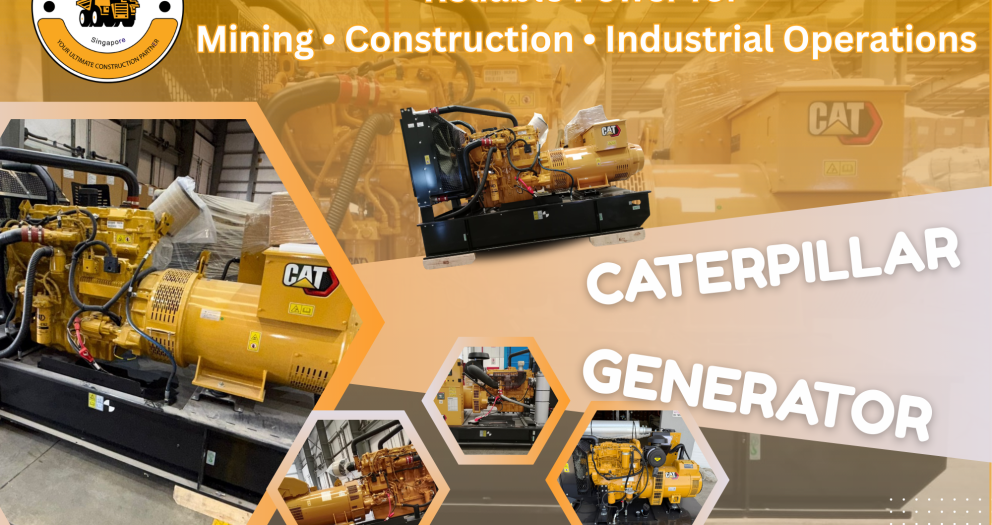
Dependable Power to Mine Construction Industrial activity

Caterpillar Generator is an industrial diesel generator system that is configured so as to provide stable, efficient, and reliable power supply in the greatest number of operational requirements.

The generators are best suited in places where there is large power requirement or where there are no permanent power facilities.

Caterpillar generators have a world-renowned reputation of quality and durability and can be used to back up critically important processes in the mining industry, construction industry, and heavy industry sectors.

A. Principal Operations of Caterpillar Generator.

Prime Power Source In places where there are no permanent electricity networks, Caterpillar generators can be applied as the main source of power. The common uses are:

  • Mining sites
  • Construction projects
  • Remote operation sites
  • Worker camps

Industrial Supply of Power

Such generators can be used to provide electricity to any other industrial equipment like:

  • Crushers
  • Conveyor systems
  • Pump systems
  • Workshop equipment
  • Lighting towers

B. Advantages of Utilizing Caterpillar Generator.

The Caterpillar diesel engines have become famous in terms of their superior longevity and capability of working round the clock under heavy and strenuous workload environments. Best in Mining and Construction. Caterpillar is a popular generator in large scale projects which include:

  • Mining sites
  • Road construction projects
  • Quarry operations
  • Oil and gas projects

Stable Power Output

Caterpillar generators are designed to provide consistent voltage output to ensure they are safe and dependable to the industrial machinery and sensitive electronic devices.

Fuel Efficient Performance

Caterpillar generator engines are made to offer optimal functioning with an enhanced rate of fuel efficiency compared to most of the traditional generator systems.

Simple Service and International Support.

The dealer network that is spread all over the world is a guarantee that spare parts and maintenance services can be easily accessed, which is why Caterpillar can continue to provide reliable operation of the generators all the time.

Insight

Caterpillar generators have grown to be a reliable source of power in most mining and construction works around the world. These generator sets are capable of supplying heavy equipment, workshops and the supporting facilities with their capability of providing steady and reliable power supply, without failure.

The most important differences and benefits of their working

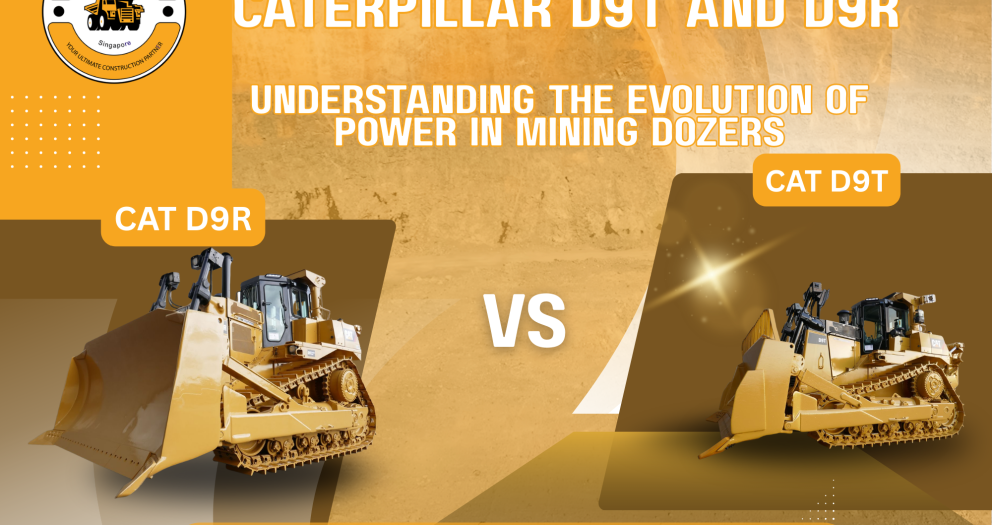
Bulldozers are supposed to be able to perform with heavy workloads in a demanding environment of mining and large-scale earthmoving. Two of the most notable machines of this type include the Caterpillar D9T and Caterpillar D9R which are very powerful dozers that have gained a solid reputation in mining, quarry, as well as infrastructure projects worldwide.

These two machines seem highly similar at first sight. They are both in the same category of high capacity track-type tractors that are used to operate in difficult ground conditions, heavy pushing operations, and full-time production conditions. Their major applications include eliminating overburden, ground preparations, handling of stockpiles, and supporting other machinery within the mining areas that are active.

Nevertheless, as much as they have several fundamental traits in common, there are various material differences between the two models. The D9R is a long established workhorse in the mining industry which is highly prized due to its longevity and relative mechanical dependability. Gradually, it turned out to be a reliable machine in countless locations where push force and reliable operation were needed.

D9T, in its turn, is the next phase in the development of this type of the machine. Based on the notable base of the D9 series, it brings with it better efficiency, new technology and comfort of the operator. These developments contribute to increased working hours, better fuel consumption, and easier handling of the machines- aspects which could make a significant change in the modern operations when the productivity and management of the cost of operations is of essence.

The difference between these two machines cannot be explained just by comparing specification. It is the identification of the fitting of each model to particular operations. There might be those operations where the reliability and ease of operating with the D9R can be of a superior priority and those where the technological advancements and operation efficiency of the D9T can be of benefit.

Finally, the two machines are still effective resources in the heavy duty. When appropriately aligned to the requirements of the jobsite either of the dozers can be important in ensuring the preservation of productivity, assist site building, and also see the large earthmoving operations maintain their performance.

Back to Top
Product has been added to your cart